An Academic-Practitioner Dialogue on the sidelines of the United Nations Framework Convention on Climate Change (UNFCCC) June negotiating session in Bonn, 2024
The TRANSGOV team was in Bonn in June 2024 to organize an academic-practitioner dialogue bringing together climate transparency negotiators from Least Developed Countries (LDCs) to advance the aims of our recently awarded NWO-impact explorer project.
In 2023-24, a significant share of the core budget of the UNFCCC secretariat went towards transparency-related activities, including activities intended to encourage and support all developing countries to adhere to global reporting requirements regarding their climate actions and aspirations. An essential question for the TRANSGOV project is whether ever growing demands for more climate transparency from all countries are generating domestic benefits.
TRANSGOV insights from South Africa and India suggest that benefits are often hard to realize. More importantly, what transparency is delivering in practice domestically for countries is hardly assessed, and very little is known about the domestic consequences for LDCs in particular of engaging in global transparency arrangements.
To bring ongoing research insights to and learn from the LDC context, the TRANSGOV project organized an academic-practitioner dialogue entitled: Questioning the Status Quo: What does LDC engagement in UNFCCC transparency arrangements deliver? This one-of-a-kind dialogue was meant to delve into the complexity of climate transparency and its consequences for LDCs, and was the first activity of our Impact Explorer grant, intended to generate impact from existing research findings in new contexts.
The event took place on 8 June 2024, from 9:30 a.m. to 2 p.m., and was hosted at the German Institute for Development and Sustainability (IDOS), Bonn, on the sidelines of the UNFCCC Subsidiary Bodies negotiating session (SB-60).
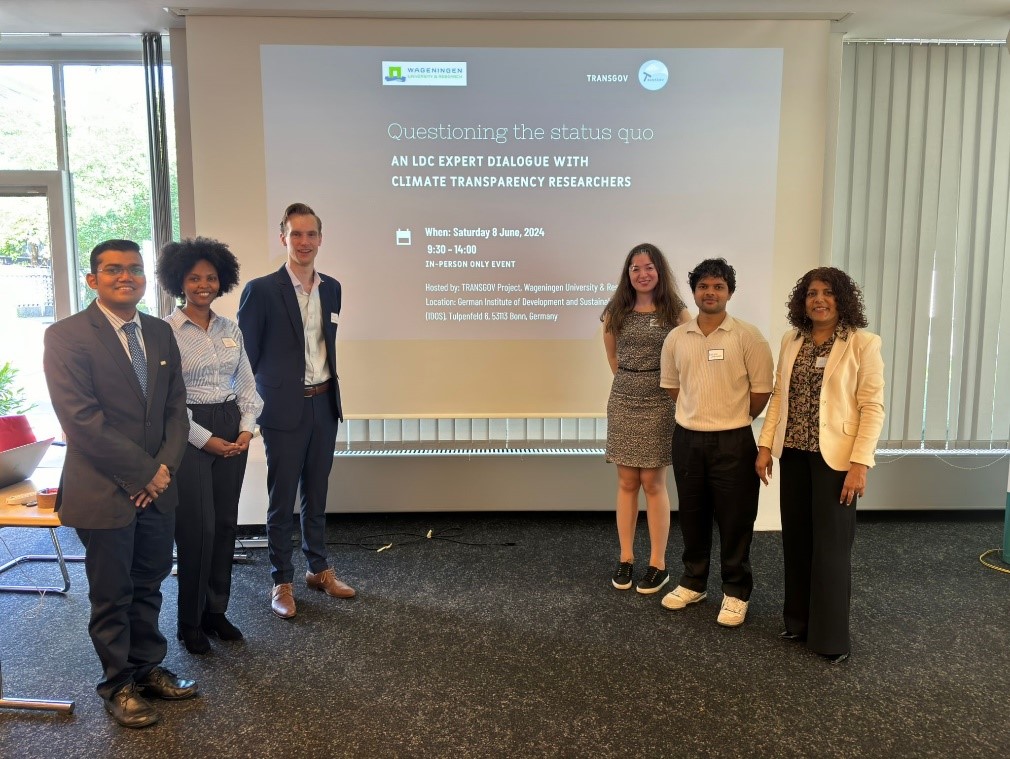
A Warm Welcome and Setting the Stage
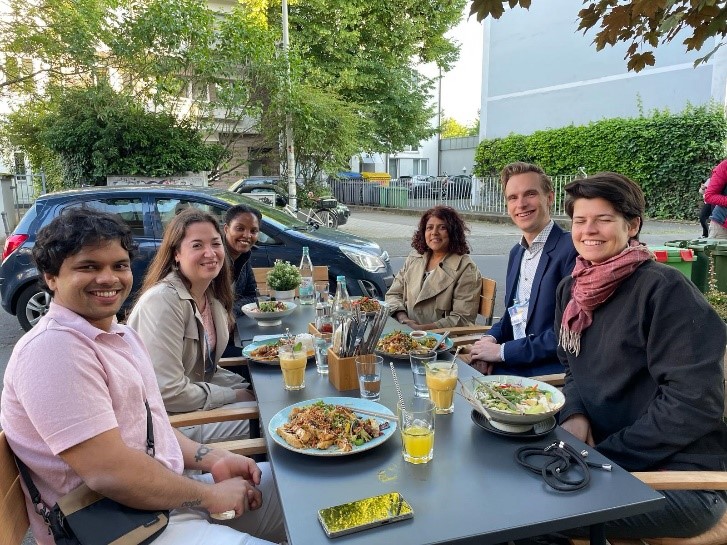
The event began with breakfast, where attendees could mingle and register for the dialogue. Following this, after a short introduction by the TRANSGOV project leader, Prof. Aarti Gupta, Emelie Broek, a TRANSGOV affiliated PhD researcher took over as moderator of the event and two icebreaking activities began. The first icebreaker involved each negotiator sharing a fun fact about their country, with others having to guess where the participant was from. The second icebreaker was targeted towards exploring the perspectives held by the attendees regarding benefits and burdens of engaging in global transparency systems for their countries and the extent of their engagement and experience with UNFCCC transparency-related events thus far. These events sought to build trust and camaraderie among the participants, and set the stage for further in-depth dialogue.
Diving Deep into LDC Reporting Experiences
The first substantive interactive session of the dialogue consisted of an activity called ‘Appreciative Storytelling’ where participants paired up to share a story of benefit or burden from engaging in global climate transparency systems. In a subsequent plenary session, each participant shared their partner’s story and whether it resonated with them. The stories ranged from an individual transparency practitioner’s professional responsibility to their country’s experience and reflections about the scope and practices of UNFCCC transparency mechanisms. The rich plenary discussion yielded competing insights. For example, some participants stated that, despite its limitations, the transparency process had resulted in improved intra-governmental collaboration and data management within their respective countries. However, there was also a general sentiment that there is limited scope to push back against globally set transparency requirements, even where these may not fully resonate with domestic priorities. This provided an avenue to think through, in the second half of the dialogue, what opportunities existed to address this potential disjunct between global and domestic priorities.

A short mid-morning coffee break provided a much-needed pause, allowing participants to network and exchange ideas. After the morning session’s focus on current engagement with transparency requirements, it was now time to look towards the future and to consider whether and how to reimagine transparency mechanisms to tailor them to better serve the unique needs of LDCs.
Reimagining Engagement with Transparency Arrangments
This began with the TRANSGOV team offering an academic perspective on burdens and benefits of global climate transparency, and lessons learned from ongoing global-level analyses and case studies in South Africa and India.
Prof. Aarti Gupta, Dr. Rahwa Kidane, affiliated postdoctoral researcher with TRANSGOV, and Max van Deursen, PhD researcher from TRANSGOV, pitched a shared vision on the scope and practices of transformative transparency to the plenary. They highlighted critical insights from the project’s research thus far, which question the widely held belief that increased transparency inherently benefits all countries. They also presented and discussed a visualised alternative transparency framework that may better serves the needs of LDCs.
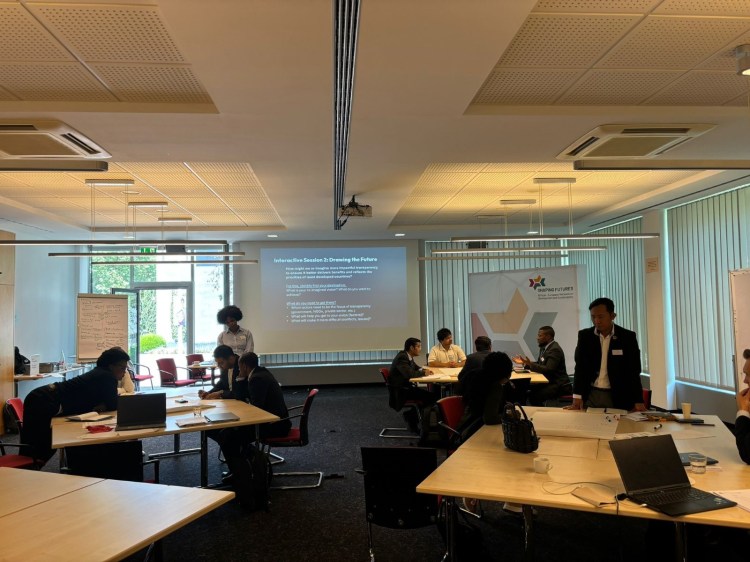
This was followed by a second interactive session called ‘Rich Picture’. For this activity, the participants were divided into groups of three to four. They were then tasked with collaboratively developing an alternative vision for engaging in global transparency arrangements, by visually representing their ideas. This creative activity allowed participants to think beyond established paradigms, both in the final product of a reimagined transparency mechanism, but also in the process of creating it.

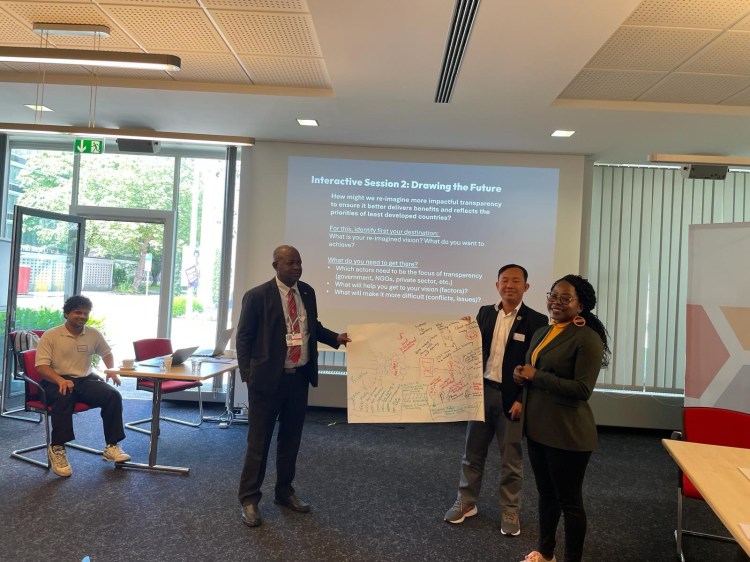

After 20 minutes, each group was asked to present their picture and engage in discussions with the plenary. It was very interesting to see the ways in which the groups agreed with or differed from the status quo narrative that engagement in global transparency systems provides a range of domestic benefits. Different groups had different approaches to addressing the role for transparency in addressing domestic climate change priorities. One group imagined climate change action as a ‘planetary boat’ that we are all sailing in together, using transparency for building trust and accountability within that framework. Another group emphasised that increased transparency should be linked to providing people with a good and healthy life. Meanwhile, a third group reimagined more bottom-up transparency systems, which would encourage everyday citizens to contribute to climate-related transparency reporting through an app. A recurring theme was that while LDCs have flexibility and discretion in adhering to global reporting requirements, adhering to these requirements was still seen as a de facto obligation—a way to show commitment to the international process and demonstrate national competences but also the need for international support.
Reflection and Closing Address
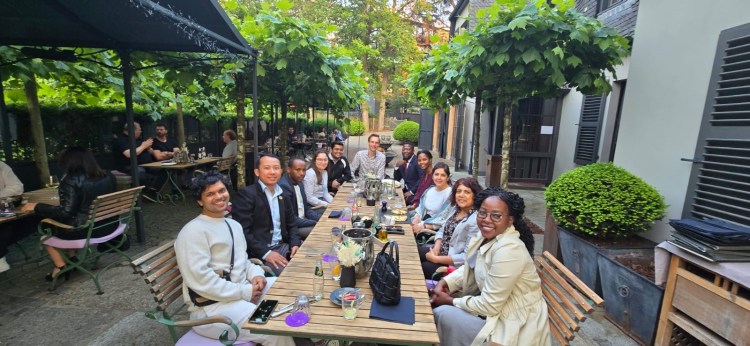
After the Rich Picture activity, the group reflected on the workshop and its theme in a closing plenary. The participants were provided with three guiding questions to elicit their reflections on the dialogue and UNFCCC transparency mechanisms in general, which generated useful overall insights from different LDC contexts. In closing remarks, Prof. Aarti Gupta thanked the participants and highlighted opportunities in both research and policy practice to reimagine engagement with global UNFCCC transparency obligations for LDCs, now also with the Paris Agreement’s Enhanced Transparency Framework beginning. The dialogue concluded with a networking lunch, where the discussions continued informally.
Looking Forward
This pioneering dialogue was the first of its kind to bring academics and transparency practitioners together, to discuss emerging research findings from TRANSGOV and explore together the real-world impacts of engaging in climate transparency for LDCs. It critically examined the dominant narratives on the benefits of such engagement. It also provided a glimpse into how the goals and mechanisms of transparency can be better imagined to reflect the priorities and realities of LDCs.
By bringing together academics, practitioners, and negotiators from least developed countries in a collaborative setting, the dialogue was able to spark fresh perspectives on the real-world implications of adhering domestically to global transparency obligations. It provided us with first-hand perspectives on how LDCs practically and strategically engage with the global transparency framework to leverage benefits such as financial and technical support. It also provided practitioners with a critical forum to interact with each other and with academics to discuss how to align transparency requirements with their national priorities and capacities. Participants were able to collaboratively explore innovative solutions, share best practices and the challenges of engaging with the current transparency mechanisms. By bridging the gap between academic research and practical implementation, the event sought to ensure societal impact from TRANSGOV research and lay the groundwork for practitioners to be more critical of existing transparency frameworks.
This dialogue established a solid groundwork for continuous and future deliberations regarding climate transparency. Through nurturing a collaborative atmosphere, we hope to have co-generated some avenues for a more meaningful engagement in practice with UNFCCC transparency requirements, for individual LDC transparency practitioners, and for LDCs as a group.
The TRANSGOV team is thankful to all the participants for taking the time to participate in this dialogue, and for their enthusiastic engagement, and to IDOS for providing an ideal venue to host the dialogue. Looking forward, a second dialogue will be held in Ethiopia later this year to delve more deeply into one specific LDC context.
This TRANSGOV event is financed by the Netherlands Organisation for Scientific Research (NWO) Impact Explorer.


 TRANSGOV