TRANSGOV @COP29
In November 2024, TRANSGOV had the privilege of participating in the 29th Conference of the Parties (COP29) in Baku, Azerbaijan. At COP29, the TRANSGOV team had the chance to observe and actively engage during the two weeks of intense negotiations. Being in Baku provided crucial insights that will inform and drive TRANSGOV’s future research and endeavors. On this page, we share a brief overview of our fruitful time at COP29.


Transparency events and contested political negotiations
Attending climate negotiations in person allowed TRANSGOV to experience firsthand the latest developments in the climate regime. Additionally, COP29 provided the perfect stage to gather useful data on transparency in climate governance.
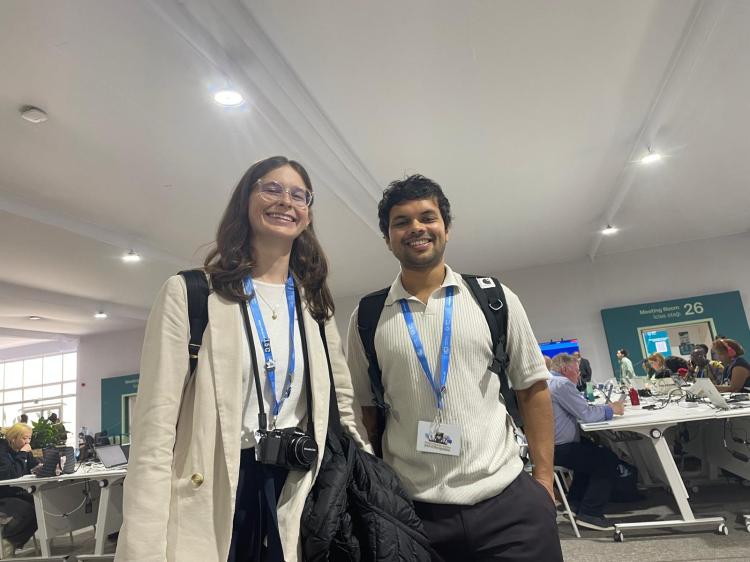
In this regard, TRANSGOV junior researchers, Rohan Agarwal and Alice Rotiroti, explored the topic of transparency for loss and damage and attended numerous transparency side events. These were mostly organized by the UNFCCC’s #Together4Trasnparency initiative, which provides support to parties and stakeholders in the implementation of the Enhanced Transparency Framework (ETF). Such events provided the perfect ground for understanding the role of Loss and Damage within the ETF, and particularly within the newly submitted Biennial Transparency Report (BTRs). Indeed, during COP29 substantial attention was placed on these BTRs, and numerous side events and high-level meetings highlighted the need for countries to submit their BTRs on time and so securing a swift execution of the ETF.
TRANSGOV Principal Investigator Aarti Gupta and TRANSGOV PhD candidate Max van Deursen followed contested political negotiations around the topic of NDC mitigation ambition and finance. New developments in these areas are of particular interest for TRANSGOV as they might have implications for future transparency requirements for countries. Additionally, these negotiation sessions were also used to gather information for future research articles on transparency and accountability in UNFCCC.


Key Contributions at COP29: Press Conferences and Keynote speech
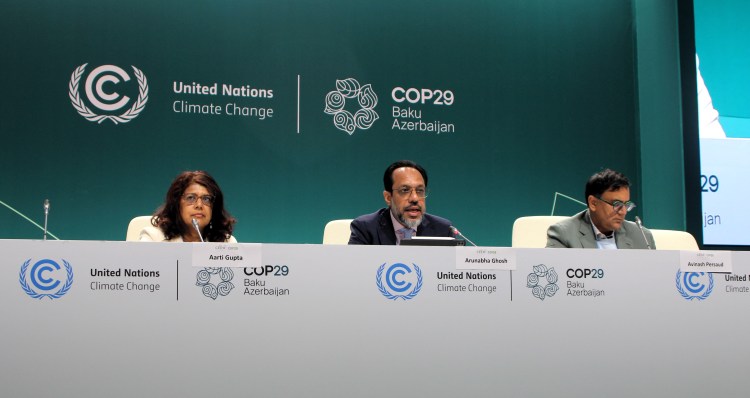
TRANSGOV did not only attend this international conference as an observer but also had the chance to bring its research insights into the policy context. Aarti Gupta was invited to two relevant events to share her expertise on climate transparency and accountability. First, she intervened at a Press conference organized by the Council on Energy, Environment and Water (CEEW) to demand accountability and the necessary finance from countries (for more details on Aarti Gupta’s intervention at the press conference visit here). Second, Aarti Gupta delivered a keynote speech at a side event organized in collaboration between the Dutch government, Wageningen University, and other stakeholders entitled “Analyzing the international architecture for climate action in food systems”. By taking the stage at COP29, TRANSGOV had the chance to share with a broad audience its scientific contribution and bring under the spotlight the current accountability deficits in the UNFCCC.


Behind the scenes: Project outreach and communication
In Baku, TRANSGOV also focused on project outreach and communication. Indeed, the team developed various communication instruments to share TRANSGOV’s achievements with the wider public. For example, a short five-minute explainer video was produced to disseminate TRANGOV’s recently published article: Is Enhanced Transparency the “Backbone” of the Paris Agreement? A Critical Assessment. In the video, the authors of the paper Max van Deursen and Aarti Gupta provide a brief overview of the key arguments made in the paper, which shows how transparency may push towards certain types of NDCs, favored by developed countries. Additionally, the TRANSGOV team is featured in a COP29 video to share insights and key takeaways from the two weeks in Baku. Finally, TRANSGOV shared updates and reflections on COP29 with its LinkedIn community.
Final reflection on COP29
COP29 was an invaluable experience for the TRANSGOV team, both scientifically and personally. Apart from being the most prominent climate change conference at the international level, COP29 also offered a stimulating space to connect with people from around the world and reflect on the role we have in this crucial battle against climate change both as researchers and individuals. For TRANSGOV, it was a chance to not only observe but actively contribute to the conversation around transparency and accountability in climate action.
However, COP29 also served moments of disappointment. The Presidency’s catchy slogan, “In solidarity for a green world”, did not deliver on its promise. This ‘Finance COP’ failed to provide the necessary financial support to developing countries, leading to a renewed distrust in multilateral efforts. Similarly, issues like Adaptation and Loss and Damage, critical to developing nations, did not receive the attention needed and ended up once again as second-order priorities.
Despite these challenges, TRANSGOV remains optimistic about the potential of the UNFCCC. We must not give up on this vital process, on the contrary, the urgency of the climate crisis demands that we continue to push for improvement. TRANSGOV believes the system can evolve and, through its research and findings, is determined to shed light on the opportunities and shortcomings of transparency in climate governance.
 TRANSGOV